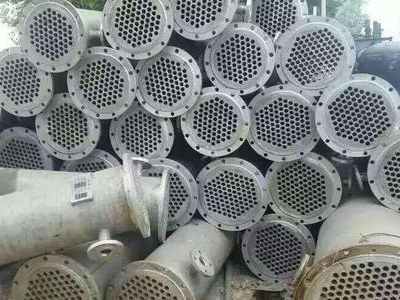
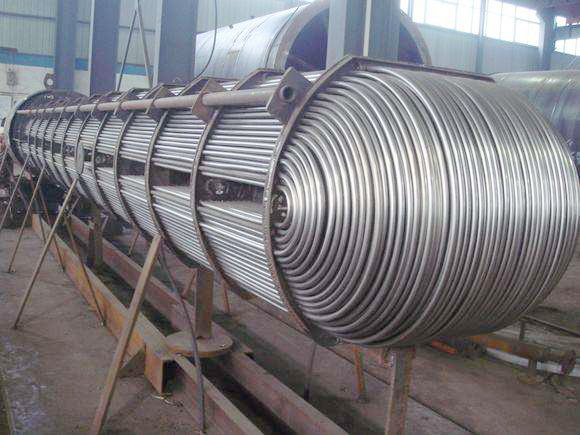
Stainless steel tube heat exchanger
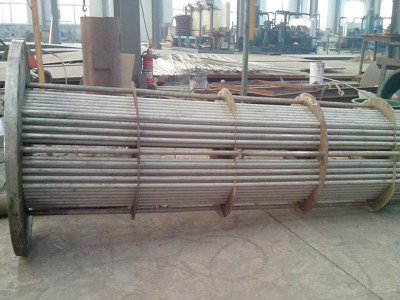
Before installing a stainless steel tube heat exchanger, first check the elevation of the installation foundation, the positioning center line, and the size of the anchor bolts. Check the nameplate of the heat exchanger and the orientation of the pipe opening. The heat exchanger has been filled with nitrogen for protection before leaving the factory. Do not open the flange blind plate before piping.
If the foundation of the heat exchange equipment is reinforced concrete, one end should be fixed, and a sliding plate should be installed on the other end. If it is a steel-based chassis, there is no need to add an additional sliding plate. The heat exchanger sits directly on the steel-based chassis, and ensure that there is no debris on the support and that there are some contact surfaces. The sliding end of the heat exchanger should be coated with grease.
The heat transfer process of the stainless steel tube heat exchanger is not only a heat transfer phenomenon, but more importantly, the fluid flow state. The heat exchanger has a controlling effect on the heat transfer process. The heat transfer boundary layers on both sides of the heat transfer surface constitute the main thermal resistance of the heat exchanger. As the fluid turbulence increases, this boundary layer becomes thinner.When the thermal resistance becomes smaller, it is beneficial to heat transfer. On the contrary, when the degree of turbulence decreases, it is detrimental to heat transfer.
In addition, the thickness of the wall of the stainless steel tube heat exchanger should also be limited. The value of heat recovery from the feeder, the heat transfer area of the heat exchanger and the price of heat exchange are inversely proportional to the fluid friction resistance, which also affects the cost of power. Generally, it is inconvenient to obtain reasonable economical design and operation data after deciding on the type, but it is inconvenient to not know the general scope of the economic conditions before selecting the type. Therefore, the manufacturer should roughly give the heat transfer coefficient and type when designing, and calculate the rough heat transfer area. At the same time, the heat exchanger needs to study the appropriate temperature difference. The flow ratio of the two fluids is the governing condition for this difference.