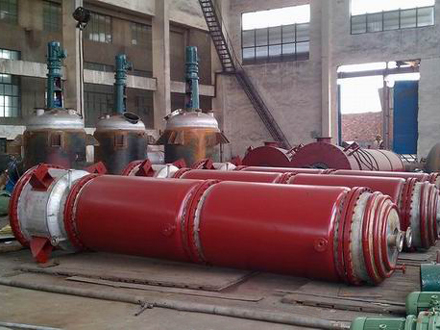
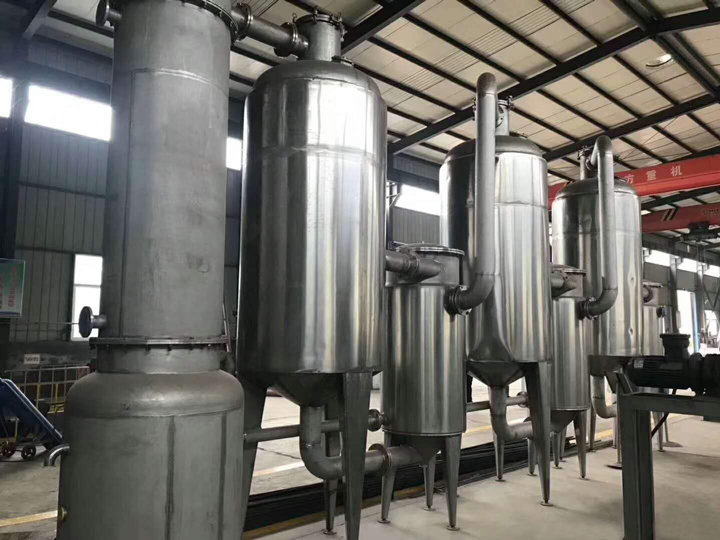
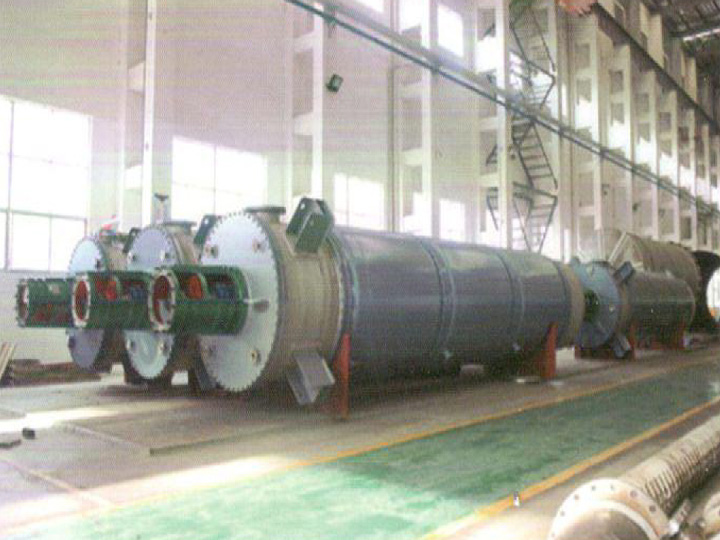
multi-effect evaporator
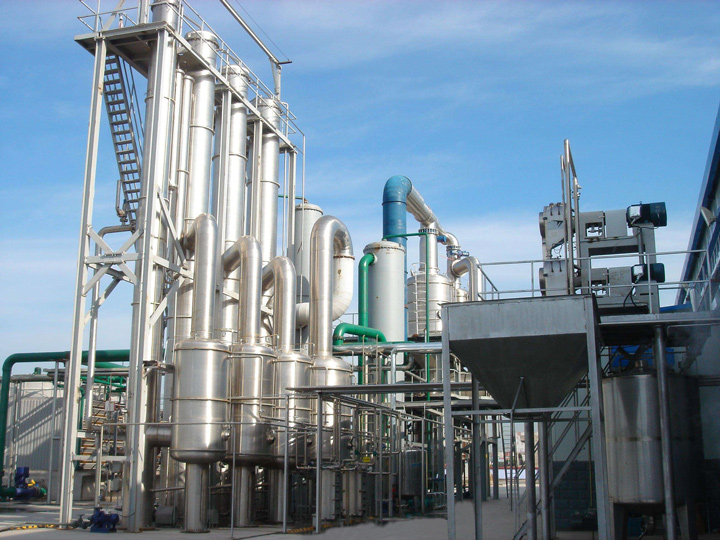
Multi-effect evaporation is a series evaporation operation in which the secondary steam of the previous effect is used as the heating steam of the next effect. In multi-effect evaporation, the operating pressure of each effect, the corresponding heating steam temperature and the boiling point of the solution are reduced in sequence.
In evaporation production, the output of secondary steam is large and contains a large amount of latent heat, so it should be recycled and utilized. If the secondary steam is passed into the heating chamber of another evaporator, as long as the operating pressure and boiling point of the solution in the latter are lower than those in the original evaporator, the introduced secondary steam can still play a heating role. This operation method is called multi-effect evaporation.
Each evaporator in multi-effect evaporation is called a first effect. The purpose of using a multi-effect evaporator is to save heating steam consumption. Theoretically,1kgHeated steam can evaporate approximately1kgwater.
However, due to heat loss and the latent heat of vaporization of water in the separation chamber is greater than the latent heat of condensation in the heating chamber, the actual evaporation1kgThe heating steam required for water exceeds1kg. As a rule of thumb, the economics of steam (U=W/D), the single effect is0.91;Double effect is1.76; The three effects are2.5;The four effects are3.33; The five effects are3.71wait. It can be seen that as the effect number increases,W/DThe growth rate gradually decreased. For example, when changing from single effect to double effect, heating steam can save approximately50%; When the four-effect is changed to the five-effect, the heating steam only saves10%. However, as the effect number increases, the temperature difference loss of heat transfer increases, which greatly reduces the production intensity of the evaporator and doubles the equipment cost. When the efficiency increases to a certain level, the savings in steam costs due to the increased efficiency may be outweighed by the additional equipment costs.